



There was a time I stood in front of my mirror every morning and felt nothing but doubt. Not because anything was terribly wrong, but because I had spent years listening to a quiet inner voice that kept telling me I was not enough. It was not until I started using daily affirmations for women that something inside me began to shift, slowly, then all at once.
If you have ever caught yourself replaying the same self-critical thoughts before your day even begins, you are not alone. Millions of women search every day for words that can help them feel grounded, capable, and worthy, and that is exactly what this article is here to give you. Whether you are starting your morning routine, rebuilding your confidence after a hard season, or simply looking for positive affirmations for women that feel real and not rehearsed, this guide covers everything you need.
You will find 100 carefully written affirmations organized by life situation, a breakdown of how affirmations actually work inside the brain, tips on how to use them daily, and answers to the most common questions women ask about this practice. No fluff, no filler. Just words that work.
What Are Positive Affirmations and Why Do Women Need Them
Positive affirmations are short, intentional statements spoken or written in the present tense that reflect who you want to be or how you choose to see yourself. They are not wishful thinking. They are not self-delusion. They are a structured practice rooted in decades of psychological research, and when done consistently, they have the ability to change the way your brain responds to stress, self-doubt, and fear.
Women, in particular, carry a unique emotional weight. Research in positive psychology shows that women are statistically more prone to the negativity bias, a built-in mental pattern where the brain gives more attention and memory space to negative experiences than positive ones. This means that without a daily counter-practice, many women start each morning already defaulting toward self-criticism, worry, or comparison.
Daily affirmations for women work as that counter-practice. They interrupt the cycle of negative self-talk and give the mind something intentional to hold onto instead.
The Science Behind Affirmations: What Actually Happens in Your Brain
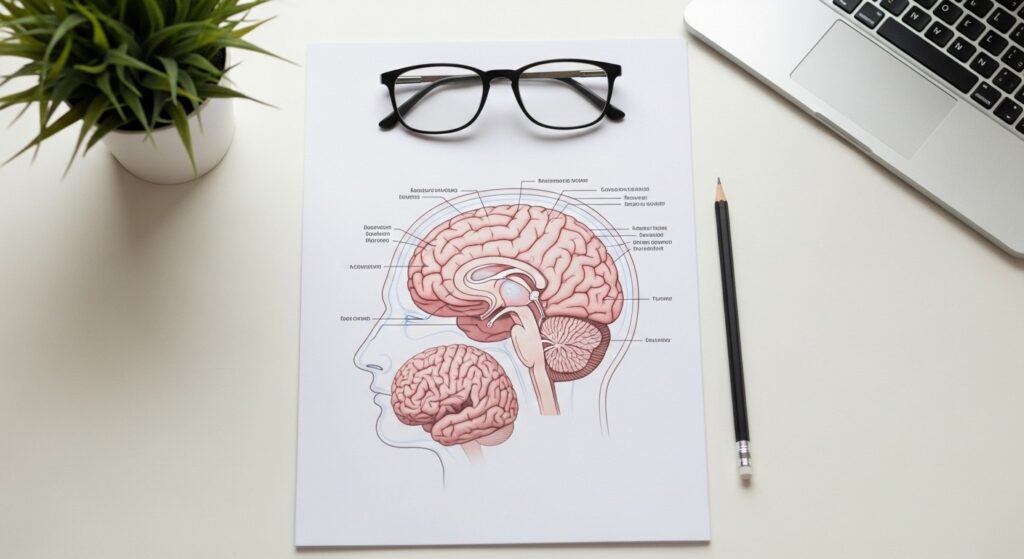
Understanding why affirmations work makes it far easier to commit to them. This is not about positive thinking as a vague concept. There is real neuroscience behind it.
When you repeat a statement about yourself consistently, your brain begins to treat it as familiar information. The brain changes physically by creating new connections between nerves, a process known as neuroplasticity. As time goes on, these new paths become more powerful than the old, negative ones. You are not pretending your struggles do not exist. You are training your brain to respond to them differently.
Self-affirmation theory, developed by psychologist Claude Steele in the 1980s, showed that when people affirm their core values and positive identities, they become more resilient in the face of threatening information. A later study published in the journal Social Cognitive and Affective Neuroscience found that self-affirmation activates the brain’s reward centers, the same areas that light up when you receive something genuinely positive.
This means that when you say “I am capable and strong,” it’s not just words without meaning. It is neurologically productive.
Additionally, Cognitive Behavioral Therapy (CBT), one of the most evidence-based forms of therapy in psychology, uses affirmation-style reframing as a core technique to treat anxiety, depression, and low self-esteem. Therapists regularly ask patients to identify distorted negative thoughts and replace them with accurate, supportive ones. That is, in its simplest form, what an affirmation does.
Why Positive Affirmations for Women Are Different From Generic Motivation
A motivational quote on a coffee mug tells you to hustle. A positive affirmation for women speaks directly to the internal world most women actually live in.
Women are more likely to internalize failure personally, to feel responsible for everyone else’s emotional state before their own, and to dismiss their achievements as luck rather than skill. This is not a character flaw. It is the outcome of many years of social conditioning.And it means that women affirmations need to be built differently from the generic “you can do it” content that fills most motivation spaces.
The most effective affirmations for women address the specific lies that women are most likely to believe about themselves. Things like:
- I am too emotional to be taken seriously
- My needs do not matter as much as everyone else’s
- I am not smart, experienced, or ready enough
- Other women have it figured out and I am falling behind
- Being confident means being arrogant
These are the beliefs that self-limiting beliefs theory addresses directly. When an affirmation speaks to one of these specific wounds, it creates real emotional resonance, and that is when it stops feeling like a script and starts feeling like truth.
The Difference Between Affirmations, Mantras, and Quotes
Many people use these three terms interchangeably, but they serve different functions.
| Term | Definition | How It Is Used | Best For |
| Affirmation | A personal, present-tense statement of identity or intention | Repeated daily, written, spoken aloud, or used in mirror work | Rewiring self-belief and building confidence |
| Mantra | A short word or phrase used to anchor the mind during meditation | Repeated silently or aloud during mindfulness practice | Calming anxiety, staying present |
| Quote | A statement from someone else that inspires you | Read, shared, or saved for motivation | Inspiration and perspective |
Affirmations are the most personal of the three because they are written in your voice, about your life. A quote tells you what someone else believes. An affirmation communicates what you believe about yourself.
Who Uses Daily Affirmations and What They Actually Get From Them
The women who benefit most from a consistent affirmation practice daily are not the ones who have everything figured out. They are the ones rebuilding after a loss, showing up exhausted but refusing to give up, navigating a career shift, a difficult relationship, a health challenge, or simply the quiet loneliness that no one talks about.
Morning affirmations for women are especially powerful because the first twenty minutes after waking are when the subconscious mind is most receptive. Psychologists refer to this as the hypnopompic state, the transitional period between sleep and full waking consciousness. Using affirmations during this window plants intentional thought before the noise of the day rushes in.
Self-care affirmations, journaling, and mirror work are three of the most commonly used delivery methods. Each has its own advantages depending on your personality and lifestyle, and we will cover all three in detail later in this guide.
What women consistently report after building a positive affirmations habit is not sudden dramatic transformation. It is something quieter and more durable: a gradual shift in the way they talk to themselves, a growing ability to challenge their own inner critic, and a steadier sense of self-worth that does not depend on anyone else’s approval.
That is what makes this practice worth taking seriously.
Morning Affirmations for ladies to begin the Day right

These affirmations are meant to be said within the first few minutes of your morning, before checking your phone, before the demands of the day begin.
- Today I choose to show up for myself with the same energy I give to everyone else.
- I wake up this morning with purpose and I will carry it through every hour.
- My morning sets the tone for my day and I choose peace, clarity, and confidence.
- I am allowed to take up space today, in every room I walk into.
- This morning I release yesterday’s weight and begin again with fresh intention.
- I deserve a good day and I have the power to create one.
- I start this day knowing that I am enough exactly as I am right now.
- My body woke up this morning and that alone is something to be grateful for.
- I face this day with an open heart and a clear mind.
- Something good is going to happen today and I am ready to receive it.
Positive Affirmations for Women to Build Confidence
Affirmations for confidence women trust most are the ones that speak directly to the doubt they carry most quietly.
- I trust my instincts because they have guided me well before.
- I do not need to shrink myself to make others comfortable.
- My voice matters and what I say deserves to be heard.
- I am not behind. I am on my own timeline and it is the right one.
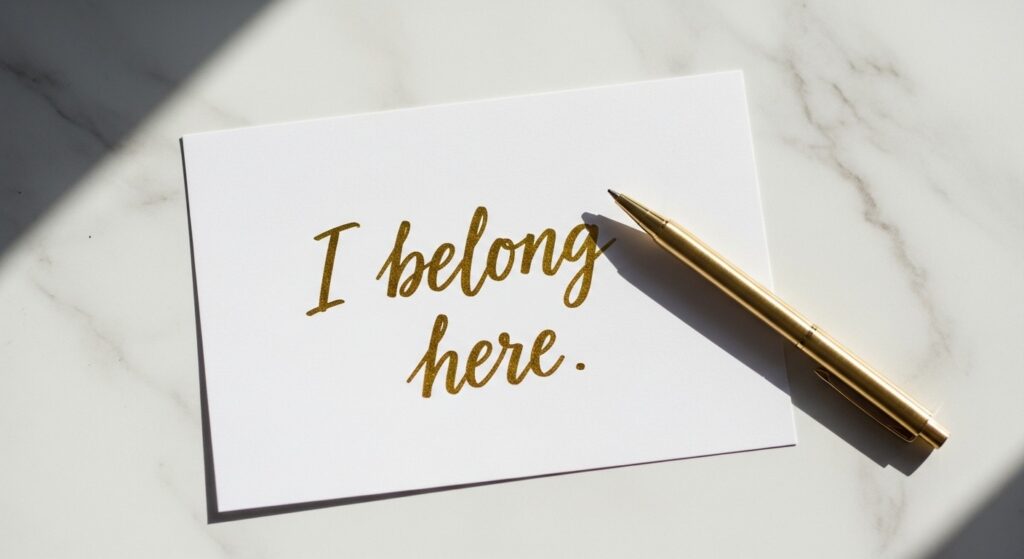
- I walk into every room knowing I belong there.
- Confidence is not something I perform. It is something I build every single day.
- I release the need for other people’s validation to feel good about myself.
- I have survived every hard day so far and that makes me stronger than I realize.
- I am learning, growing, and becoming more myself with every passing day.
- My worth is not measured by my productivity or how much I accomplish today.
Self-Love Affirmations for Women

Positive affirmations for self-love are not about pretending to be perfect. They are about choosing yourself anyway.
- I love myself not because I am perfect but because I am real.
- I treat my own heart with the same gentleness I offer to people I love.
- My body deserves care, rest, and kindness today.
- I forgive myself for the times I was harder on myself than I needed to be.
- I am worthy of love that does not require me to change who I am.
- Taking care of myself is not selfish. It is necessary.
- I choose to see myself through eyes of compassion rather than criticism.
- Every scar I bring tells a story of survival, no longer failure.
- I do not have to earn rest. I deserve it simply by being human.
- I am becoming someone I am genuinely proud of and that journey matters.
Empowerment Affirmations for Women
These empowerment affirmations for women are built for the moments when you need to remind yourself of your own strength.
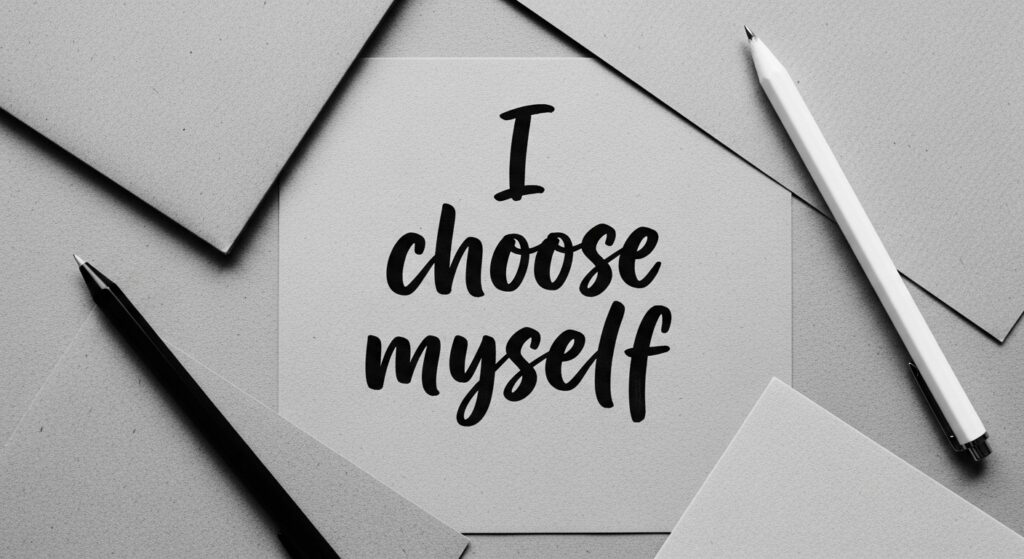
- I am not waiting to be chosen. I am choosing myself.
- The challenges in my life do not define my ceiling. They reveal my strength.
- I have everything inside me that I need to move forward.
- I do not apologize for knowing what I want and going after it.
- My ambition is not too much. It is exactly the right amount.
- I am a woman of depth, resilience, and quiet power.
- The version of me that exists five years from now is being built by what I do today.
- I give myself permission to be both soft and strong at the same time.
- I refuse to let fear make decisions for me any longer.
- The world is better because of the specific way I show up in it.
Affirmations for Women With Anxiety
For the women whose minds run fast and whose hearts carry worry, these affirmations are written for you.
- I am safe right now even when my mind tells me otherwise.
- My anxiety does not have the final word. I do.
- I breathe in calm and I breathe out the tension I have been holding.
- I do not need to have everything figured out today.
- It is okay to feel uncertain. Uncertainty does not mean danger.
- I choose to release what I can not manipulate and consciousness on what i’m able to.
- My nervous system is allowed to rest. I am allowed to feel peace.
- I’ve dealt with tough things earlier and i’m able to take care of this too.
- One moment at a time is all I need to move through this day.
- I am more than my worried thoughts. I am the woman who keeps going anyway.
Affirmations for Women Going Through Hard Times

These affirmations for women going through hard times speak to grief, loss, disappointment, and the kind of pain that does not have easy words.
- I am allowed to fall apart and I am allowed to put myself back together.
- Healing is not linear and I give myself grace for every step backward and forward.
- My pain is real and so is my capacity to move through it.
- I do not now must faux i am ok. I just have to keep going.
- The hardest chapters of my story are not the whole story.
- I am rebuilding myself and that takes time. I am patient with the process.
- Even on the days I feel broken, there is something whole inside me that holds.
- I have been through fire before and I have come out knowing more about who I am.
- My struggle does not make me weak. It makes me human.
- Better days are coming and I am worth staying for them.
Affirmations for Working Women and Career Confidence

These affirmations for working women address the specific pressure of professional life.
- I bring real value to my work and the people around me feel it.
- I do not need to work twice as hard to be taken half as seriously. My work speaks for itself.
- I am qualified, capable, and exactly where I need to be right now.
- I set boundaries at work because my energy is valuable and finite.
- I ask for what I deserve because silence does not serve me.
- My ideas are worth sharing and I speak up without apology.
- I lead with integrity and that is a kind of strength that cannot be faked.
- I do not have to be liked by everyone to be respected by the right people.
- My career is building in the direction of my values and that is a success.
- I celebrate small wins because they are the foundation of big ones.
Affirmations for Women Over 40 and 50

Age is not a ceiling. These affirmations are for the women who are just beginning to understand who they really are.
- I am not past my prime. I am entering the most intentional season of my life.
- Every decade has taught me something the previous one could not.
- I know myself better now than I ever have and that is a gift.
- My age gives me wisdom that cannot be rushed or bought.
- I release the idea that my best years are behind me because that is simply not true.
- I am allowed to reinvent myself at any age and for any reason.
- The woman I am today is the result of every version of me that came before.
- I do not owe anyone a younger, smaller, or quieter version of myself.
- Life at this stage is full of possibility and I am open to all of it.
- I honor the journey that brought me here and I step forward with confidence.
Affirmations for New Moms and Mothers

Motherhood adjustments everything, such as how you see yourself. These affirmations are for the women navigating that transformation.
- I’m doing better than I think I am. My love for my child is proof.
- I am allowed to need help and asking for it makes me a stronger mother.
- My identity as a woman did not disappear when I became a mother. Both exist together.
- I do not have to be a perfect mother. I simply have to be present and actual.
- My child does not need me to be flawless. My child needs me to be here.
- Taking care of myself makes me a better mother, not a selfish one.
- I trust my instincts because no one knows my child the way I do.
- The love I give my family starts with the love I give myself.
- I am growing alongside my child and that growth is something to be proud of.
- On the hard days, I remind myself that showing up is enough.
Bedtime and Nighttime Affirmations for Women

Most affirmation content focuses on mornings. But the thoughts you take to sleep shape how you wake up. These bedtime affirmations for women are for the quiet end of the day.
- I release today’s worries because tomorrow is a fresh start.
- I did the best I could today and that is genuinely enough.
- I let my body rest fully because it has worked hard and it deserves recovery.
- I close this day with gratitude for the small things that went right.
- My mind is allowed to be quiet now. The thinking can wait until morning.
- I release the conversations I replayed and the mistakes I magnified.
- I am safe, I am loved, and I am worthy of deep and peaceful rest.
- Tomorrow I will begin again and that possibility is something beautiful.
- I choose to end this day with kindness toward myself.
- I am proud of the woman I am becoming and I rest in that knowing tonight.
How to Actually Use These Affirmations Every Day
Reading affirmations once and hoping for results is like reading about exercise and expecting to get fit.The exercise itself is what creates trade. Here is what consistent, effective use actually looks like.
The Mirror Method
Mirror work, a technique made widely known by self-help author Louise Hay, involves standing in front of a mirror, making eye contact with yourself, and speaking your chosen affirmations aloud. It feels uncomfortable at first, and that discomfort is actually useful information. The resistance you feel is your brain encountering a belief that contradicts what it currently holds as true. The goal is not to eliminate that resistance immediately but to keep returning until the new statement begins to feel more natural than the old one.
Choose three to five affirmations from this list, stand in front of your mirror in the morning before the day begins, and speak them slowly. Do not rush. Allow every one land earlier than moving to the following.
Journaling and the Written Practice
Writing affirmations by hand engages a different cognitive process than speaking them. When you write, you slow down. You process the words more deliberately. A simple practice of writing five to ten affirmations for women in a dedicated journal each morning takes less than five minutes and has been shown to improve mood, reduce cortisol levels, and reinforce a growth mindset over time.
You do not need a special journal. Any notebook will do. What matters is the consistency, not the container.
Pairing Affirmations With an Existing Habit
The most reliable way to build any new habit is to attach it to one you already have. This concept, often called habit stacking in behavioral psychology, means pairing your daily affirmations for women with something you already do without thinking. Options include:
- While your coffee or tea brews in the morning
- During your skincare or hygiene routine
- On your commute, spoken aloud or listened to as a recording
- Before sleep, as a part of a wind-down ordinary
The trigger creates automaticity. Within a few weeks, you will reach for your affirmations without having to remind yourself.
How Long Before You Notice a Difference
This is one of the most common questions women ask, and the honest answer is that it depends on consistency, emotional readiness, and which beliefs you are working to replace. Research in neuroplasticity suggests that repeated mental patterns begin forming measurable new neural pathways within twenty-one to sixty-six days of consistent practice. However, many women report noticing a shift in their inner dialogue within the first two weeks, not dramatic transformation, but a quieter inner critic and a slightly steadier sense of self.
The key word is consistency. Sporadic affirmation use produces sporadic results. Daily practice, even for just five minutes, produces durable change.
Writing Your Own Affirmations
The 100 positive affirmations for women in this guide are a starting point, not a ceiling. The most powerful affirmations are often the ones you write yourself, because they address your specific wounds with your specific language.
To write your own:
Start by identifying the negative belief you carry most often. Maybe it is “I am not smart enough” or “I always mess things up” or “No one really values what I bring.”
Then flip that belief into a present-tense, first-person statement of its opposite truth. Do not make it so extreme that your brain immediately rejects it. In preference to “i am the most amazing man or woman in each room,” strive “I convey a attitude this is uniquely mine and that has actual cost.”
The more specific the affirmation, the more effectively it targets the belief you are trying to shift.
Special Situations Women Often Search For
Affirmations for Women Healing From Trauma
Healing from trauma is not a straight line and affirmations during this process need to be gentle rather than demanding. The goal is not to override your pain with positivity but to slowly build a relationship with your own resilience.
Affirmations like “i am recuperation at the tempo my body and thoughts need,” “My past does no longer non-public my destiny,” and “i am allowed to absorb relaxed area in my own life” work well here because they do not demand that you feel something you are not yet ready to feel. They simply hold a door open.
If you are actively working through trauma, affirmations work best alongside professional support. The American Psychological Association maintains a therapist locator and resource directory for women navigating mental health challenges.
Affirmations for Women With Low Self-Worth
Low self-worth often presents differently than low confidence. Confidence is situational. Self-worth is foundational. A woman can be highly capable in her career and still feel fundamentally undeserving of love, rest, or good things.
Self-worth statements that work at this level include: “I do not need to earn my right to exist and be cared for,” “My worth was never conditional on my performance,” and “I am allowed to receive goodness without immediately questioning it.”
These affirmations work slowly because the beliefs they are replacing were built slowly. Be patient with yourself in this process.
Affirmations for Women Going Through Divorce or Starting Over
Major life transitions strip away the identities women often build their sense of self around. After a divorce, a job loss, or a move, many women describe feeling like they have forgotten who they are outside of a role they no longer hold.
Affirmations for women starting over that address this directly include: “I am more than the role I used to play,” “Starting over is not failure. It is the bravest kind of beginning,” and “I am rebuilding something better because I now know what I actually need.”
According to research cited by Harvard Health Publishing, self-affirmation practices during periods of high stress help buffer the physical effects of chronic stress on the body, including improved cardiovascular response and lower cortisol reactivity.
Affirmations for Body Image and Physical Self-Acceptance
Body image is one of the most deeply personal areas where women carry negative self-talk, and it is one of the least addressed in mainstream affirmation content. Affirmations that work here are not about convincing yourself your body looks a certain way. They are about shifting the relationship between you and your body from critical observer to grateful inhabitant.
Statements like “My body carries me through this life and that deserves respect,” “I do not owe anyone a different body than the one I am living in,” and “I am more than what I look like and I choose to live from that truth” speak to the emotional root of body image struggles rather than the surface.
Final Thoughts:
There is nothing small about choosing to speak kindly to yourself. In a world that profits from women’s self-doubt, the decision to build a daily affirmations practice is quietly radical.
The 100 affirmations for women in this guide are not magic. They will not fix everything overnight. But used consistently, they become something more valuable than a quick mood lift. They become evidence, gathered one day at a time, that you are the kind of woman who shows up for herself even when it is hard.
Whatever brought you here today, whether it was a difficult morning, a difficult year, or simply a quiet sense that you are ready to begin talking to yourself differently, that instinct was right. The words you speak to yourself matter. They shape the way you see your choices, your relationships, your possibilities, and your worth.
Start with three affirmations tomorrow morning. Just three. Stand somewhere quiet, say them slowly, and mean them as much as you can. That is enough for today. Over time, enough becomes everything.
Frequently Asked Questions
Do positive affirmations actually work, or is this just wishful thinking?
Affirmations are not wishful thinking. They are a practice grounded in established psychology. Self-affirmation theory, developed by Claude Steele, has been tested across decades of academic research and consistently shows that affirming personal values and identity reduces threat response, improves decision-making under stress, and increases resilience. The key distinction is that affirmations work when they are practiced consistently and are believable enough that the brain does not immediately reject them. A statement so far from your current reality that it feels false will not work. A statement that slightly stretches your current belief, repeated over time, will.
How many affirmations must i exploit at one time?
Three to five is the most manageable and effective number for daily practice. Using too many dilutes the focus and makes consistency harder. Choose the affirmations that address the areas of your life or thinking where you feel the most stuck, and rotate others in as those begin to feel settled.
When is the best time to practice affirmations?
Morning is widely considered the most powerful time because the brain is transitioning from sleep, and the subconscious mind is more receptive during this window. However, nighttime affirmations are equally valuable because the thoughts you hold as you fall asleep influence how your mind processes the day’s experiences during sleep. If morning does not work for your schedule, any consistent time is more effective than no time at all.
Can affirmations help with anxiety and depression?
Affirmations are not a replacement for therapy or medical treatment, but they are a supportive practice with documented benefits for managing anxiety and improving mood. Cognitive Behavioral Therapy uses affirmation-style thought reframing as a core clinical technique. Research published in journals covering social neuroscience has shown that self-affirmation activates the brain’s reward systems, which can counter some of the neurological patterns associated with anxiety. For women dealing with clinical anxiety or depression, affirmations are most effective as a complement to professional care rather than a stand-alone solution.The national Institute of intellectual health offers assets for locating appropriate support.
What if an affirmation feels like a lie when I say it?
This feeling is normal and it actually signals that the affirmation is addressing a genuine belief you hold about yourself. The solution is not to abandon the affirmation but to soften it until it sits at the edge of believable. Instead of “i am absolutely assured,” attempt “i am building self belief each day.” rather than “i love the entirety about myself,” strive “i’m getting to know to deal with myself with extra kindness.” paintings from which you truely are, now not from which you consider you studied.
How do I know if affirmations are working?
The signs are usually subtle at first. You may notice that your inner critic is slightly quieter. You may catch yourself in a self-critical thought and gently redirect it rather than spiraling. You may find yourself responding to a difficult situation with more steadiness than usual. Transformation through affirmations does not typically arrive dramatically. It arrives the way morning does, gradually, then completely.
Can I use affirmations even if I am not a spiritual person?
Absolutely. Positive affirmations for women require no spiritual framework, religious belief, or metaphysical worldview. They are a psychological tool and they function on the basis of repetition, neuroplasticity, and intentional thought. You do not need to believe in anything beyond the brain’s capacity to change in order to benefit from consistent practice.

