


Why Saying “Good Afternoon” Matters
The phrase “good afternoon” carries more weight than just being a polite greeting. It’s a simple, yet powerful gesture that acknowledges others, offering warmth and positivity at a pivotal part of the day. Whether you’re greeting a colleague in the hallway, texting a loved one, or addressing a group in a formal environment, taking a moment to say good afternoon can create a meaningful connection. It not only conveys respect and kindness but also fosters a welcoming and inclusive atmosphere.
Our busy lives sometimes make us overlook the little gestures that bring light into someone’s day. Saying good afternoon is not only about keeping up the tradition of greetings; it symbolizes a pause to recognize someone else’s presence. It reflects mindfulness, emotional intelligence, and the desire to cultivate positivity, all values that can transform interactions, whether personal or professional.
The Impact of a Simple “Good Afternoon”
Why is greeting in the afternoon important? Here are some key reasons backed by social etiquette and the psychology of communication. The table below summarizes the primary benefits:
| Reason | Description |
| Acknowledges the Present | Greetings like good afternoon recognize the current moment, showing that you value someone’s presence and the ongoing time of day. |
| Sets a Positive Tone | A polite greeting can uplift someone’s mood, encouraging friendliness and cordial interactions. |
| Fosters Inclusivity | Saying good afternoon ensures inclusivity, especially in diverse or unfamiliar environments, reducing social barriers. |
| Builds Relationships | Regular polite gestures strengthen bonds, whether in personal or professional settings. |
| Encourages Thoughtfulness | It reflects mindfulness and offers a moment to emphasize small acts of kindness, especially during hectic afternoons when people could use a morale boost. |
Setting a Tone for the Day
The phrase good afternoon plays a critical role in shaping the tone of conversations. For instance:
For a neighbor or casual friend, it fosters camaraderie, making relationships approachable and easygoing.
For business colleagues, it establishes professionalism while keeping the interaction respectful and warm.
For loved ones, it can carry emotional weight, signaling care and thoughtfulness.
No matter the environment, critical afternoon greetings ideas highlight how such practices improve daily interactions, ultimately leading to happier and more productive relationships.
Let’s explore further as we unlock more creative, meaningful ways to brighten someone’s day with good afternoon greetings. Stay tuned for practical tips and insights!
Creative and Cultural Variations of Saying “Good Afternoon”
The way people greet one another often reflects traditions, cultural nuances, and linguistic creativity. The phrase “good afternoon”, while universal in its essence, can take on many different forms across the globe. Learning and using these cultural variations not only broadens our horizons but also builds bridges of understanding. Whether you’re traveling internationally or engaging with someone from a different background, incorporating a culturally specific greeting can enhance connection and show genuine respect.
Creative Twists on “Good Afternoon”
For many, greeting someone with good afternoon offers an opportunity to brighten the recipient’s day. While the traditional phrase is effective, adding a touch of creativity makes it even more memorable. Here are some inventive ways to say good afternoon:
Unique Phrases to Add Personal Flair:
May your afternoon be as bright as the sun
Here’s wishing you a calming and cheerful afternoon.
Hope your afternoon is brimming with joy and positivity.
These greetings are not only personal but also carry a sense of cheerfulness and optimism, making the simple act of greeting more impactful.
Creative Adjustments for Specific Contexts:
Professional Environment: Wishing you a productive and pleasant afternoon.
Casual Catch-Up: Enjoy every moment of this beautiful afternoon.
Inspirational Settings: Good afternoon! May your dreams start to bloom this hour.
By exploring creative afternoon greetings ideas, you open the door to more engaging interactions, whether in conversations, messages, or even emails.
Global Perspectives on “Good Afternoon”

Different cultures bring their own flair to greeting customs, and the variations of good afternoon around the world are no exception. Understanding and using these greetings can make cross-cultural communication more thoughtful and engaging.
Greetings Across Languages
Spanish: Buenas Tardes: A warm expression widely used in Spanish-speaking countries, buenas tardes translates directly to “good afternoon.” This greeting reflects the friendliness characteristic of these cultures.
French: Bon Après-midi: This option, while technically correct, is less commonly used in casual French conversations. Instead, saying Bonjour (hello) suffices even in the afternoon.
German: Guten Tag: This universal and polite greeting translates to “good day” and can be used interchangeably for both morning and afternoon in German-speaking countries.
Italian: Buon Pomeriggio: Though it’s less common in everyday speech, Italians suggest “good afternoon” with this phrase when formality is required.
Arabic: Masaa El kheir: This phrase, meaning “good evening” or “afternoon,” reflects the richness of Arabic hospitality and formality.
Cultural Nuances in Greeting
Japan: While not an exact equivalent to “good afternoon,” the Japanese use Konnichiwa to greet people during late morning and early afternoon hours. It expresses respect and aligns with the culture’s emphasis on politeness.
India: The traditional greeting Namaste respects the spiritual ethos of the afternoon, where mindfulness and calm are often celebrated.
UK and Australia: Informal variations like “Good arvo” (short for afternoon in Australian slang) highlight regional casualness and warmth.
Different ways to greet across languages and countries show how something as simple as good afternoon takes on unique expressions, reflecting deep societal values and norms.
The Significance of Culturally Inclusive Greetings
Globalization has integrated societies, making culturally inclusive behaviors more essential than ever. Utilizing greetings like buenas tardes or guten tag in appropriate settings can foster inclusivity and show cultural appreciation. When greeting someone in their native language, you’re not just saying the equivalent of good afternoon you’re acknowledging their heritage and identity.
How to Incorporate Cultural Greetings
Learn Contextual Use: For example, while Buon pomeriggio is correct in Italian, many Italians stick with informal greetings unless formality is required.
Mind Pronunciation: Respectfully using phrases like Masaa El kheir in Arabic or Konnichiwa in Japanese requires effort and accuracy.
Pair Greetings with Regional Practices: Bowing in Japan or a handshake in Germany further emphasizes cross-cultural respect.
Inspiring Joy Through Greetings
Whether a greeting is formal or informal, its purpose is to inspire positivity. By creatively linking traditional greetings with cultural understanding, you can leave a lasting impression. A well-thought-out good afternoon message, adapted to your context, demonstrates effort, respect, and genuine thoughtfulness.
By blending creativity with inclusivity, the variations of good afternoon greetings become tools for building connections, helping individuals celebrate diversity while remaining rooted in kindness.
Practical Tips for Using “Good Afternoon” in Daily Communication
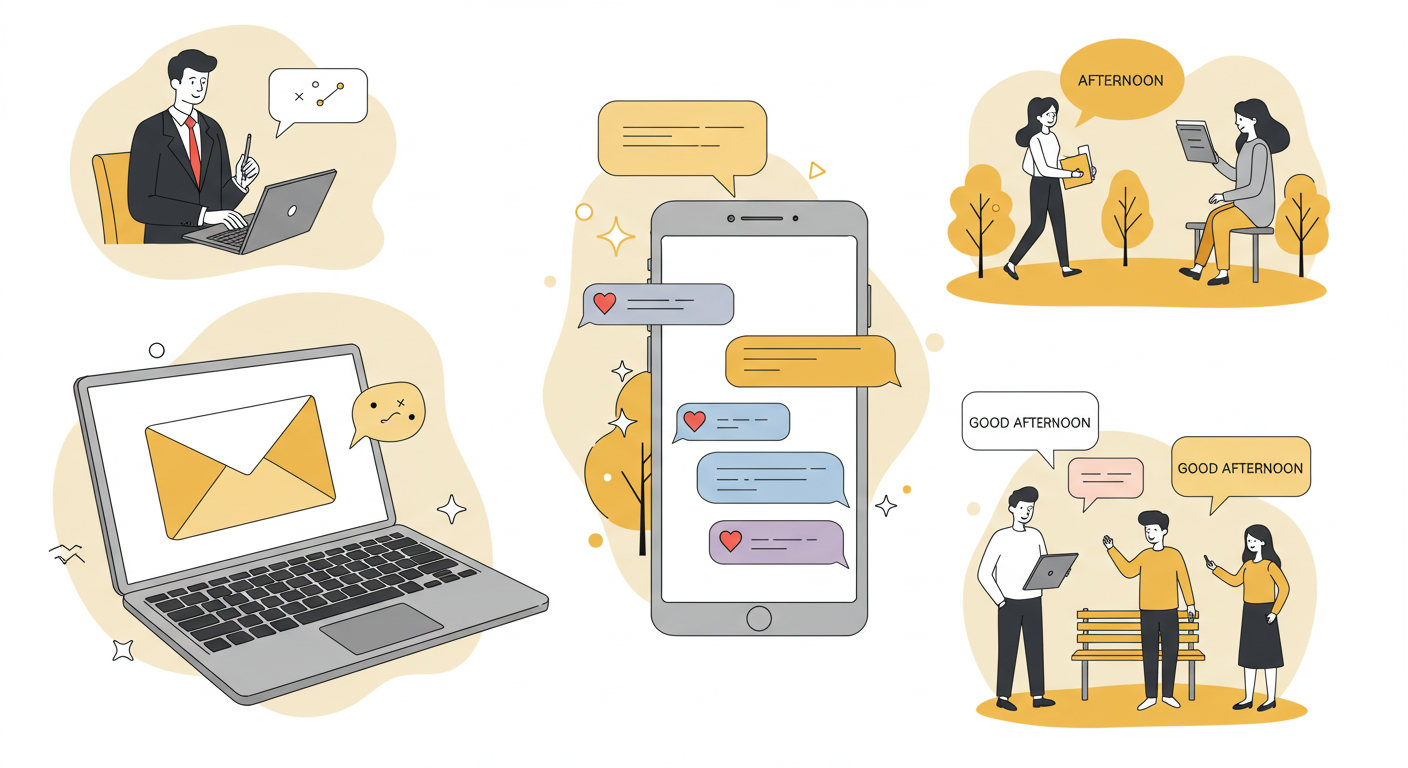
The phrase “good afternoon” is more than a polite greeting—it’s a tool for fostering connection, maintaining professionalism, and spreading positivity. Its versatility makes it ideal for personal, professional, and digital communication. To maximize its value, here are some practical tips and examples for incorporating good afternoon effectively in various contexts.
Personal Communication
Using good afternoon in personal settings can help strengthen relationships by showing care and attentiveness. Whether you’re speaking with family, friends, or acquaintances, a thoughtful use of this phrase can leave a positive impression.
Tips for Personal Settings:
Add a Personal Touch
Enhance the basic greeting by including names or specific wishes. For example:
Good afternoon, Emma! How’s your day going
Good afternoon, James. Wishing you a relaxing day ahead
Infuse Positivity
Pair the phrase with uplifting remarks to brighten someone’s mood:
Good afternoon! Hope you’re soaking up the sunshine today
Good afternoon! Here’s to a day filled with smiles and great moments.
Follow Up with a Question
Encourage conversation by adding an open-ended question:
Good afternoon, Sarah! Have you read that book I mentioned?
Good afternoon! Did you enjoy the lunch spot I recommended?
By making good afternoon more personal and engaging, you can create meaningful interactions that go beyond simple pleasantries.
Professional Communication

Professional settings often require a balance of politeness and clarity. Using good afternoon in emails, meetings, or casual workplace conversations establishes respect and sets a positive tone, especially during the post-lunch hours when energy may wane.
Tips for Professional Contexts:
Emails and Written Communication
Begin emails on the right note by incorporating good afternoon:
Good afternoon, Mr. Brown. I’m writing to follow up on our earlier discussion.
Good afternoon, team. Below are the updates for today’s project timelines.
This approach works well for addressing colleagues, clients, and management, as it demonstrates professionalism and respect.
During Meetings
Use good afternoon as an engaging opener for virtual or in-person gatherings:
Good afternoon, everyone. I appreciate your time for today’s agenda.
Good afternoon, colleagues. Let’s start by reviewing the progress we’ve made.
Maintain Respectful Tone
Professional relationships thrive on mutual respect. A warm good afternoon can create a collaborative and approachable environment, especially in multicultural workplaces:
Good afternoon, Ms. Patel. I look forward to hearing your insights.
Time-Appropriate Use
Reserve the phrase for its intended time frame, typically between 12 PM and 6 PM. Outside this period, switch to alternatives like “good morning” or “good evening” to maintain accuracy.
Digital Communication
Digital communication platforms, including text messages, social media posts, and online chats, offer additional opportunities to creatively use good afternoon. Its polite tone works well for initiating conversations or maintaining a friendly connection.
Tips for Digital Contexts:
- Text Messages
Keep it short and thoughtful:
Good afternoon! I wanted to greet you and check in with you.
Good afternoon! Don’t forget about our plan for later today.
- Social Media
Use good afternoon in greetings or updates to engage your audience:
Good afternoon, everyone! Have you tried this amazing recipe yet? Click the link to learn more.
Good afternoon, friends! What’s making you smile today
- Team Chats and Collaboration Tools
When working remotely, begin chats with a friendly greeting to foster collaboration:
Good afternoon, team. I’ve uploaded the document for today’s review.
Good afternoon! Quick question about the latest project update.
- Personalized Messages
Add context or specific sentiments to make digital interactions more engaging:
Good afternoon, John! Just saw your latest blog post great work
Good afternoon! Wishing you a productive and successful day ahead.
Common Mistakes to Avoid
To make the most of this versatile greeting, keep in mind a few simple guidelines:
- Overuse: Avoid using good afternoon excessively in a single conversation or email thread, as it can feel repetitive.
- Formal vs. Informal Settings: Adapt your tone based on the relationship and context. For instance, keep it formal for business emails and use casual phrasing for friends.
- Incorrect Timing: Saying good afternoon too early or too late in the day can come across as insincere.
Final Thoughts
Mastering the art of saying good afternoon can elevate the quality of your interactions in meaningful ways. Whether you’re chatting with a friend, addressing colleagues, or reaching out digitally, the gesture of offering a warm and thoughtful greeting can make all the difference. By tailoring your message to the context and recipient, you can ensure that your communication feels genuine, respectful, and impactful leaving a lasting impression.
Keep practicing and experimenting with how you use good afternoon in your daily communication. Even the simplest phrase can create a ripple of positivity and connection when used with intention.
Frequently Asked Questions
What is good afternoon time?
The phrase good afternoon is typically used to greet someone between 12:00 PM and 6:00 PM. It bridges the gap between the morning hours and the evening. After 6 PM, it’s generally more appropriate to use “good evening.”
Is 4 PM in the afternoon or evening?
4 PM is considered part of the afternoon, not the evening. Evening generally starts after 6 PM or when the sun begins to set. Using “good afternoon” is appropriate at this time.
What is the correct way to write “good afternoon”?
The phrase good afternoon should be written as two separate words with both lowercase letters unless it’s the start of a sentence or used as a formal greeting in an email (e.g., “Good Afternoon, Mr. Smith”). Avoid merging it into one word or adding unnecessary punctuation.
What is the best good afternoon message?
The best good afternoon message is thoughtful and context-appropriate. For example:
- Personal: Good afternoon! Hope your day is as bright as the afternoon sun.
- Professional: Good afternoon, I’m reaching out to follow up on earlier discussions.
- Inspirational: Good afternoon! May the rest of your day bring positivity and peace.
Customizing your message for the recipient adds a personal touch.
How can I make my good afternoon greetings more meaningful?
To make your good afternoon greetings more impactful, try the following:
- Add a personal touch like mentioning the recipient’s name.
- Include an uplifting or motivational phrase.
- Adapt the tone depending on whether it’s casual, formal, or professional.
For example, “Good afternoon, Sarah! Wishing you a very productive and fulfilling day.”
Can I say good afternoon in an email?
Yes, starting an email with a good afternoon is a great way to set a polite tone, especially if the email is sent after 12 PM. For example:
- Good afternoon, Mr. Johnson, I trust you are doing well.
This is professional, respectful, and suited for both formal and informal communication.
Are there alternative ways to say good afternoon?
Yes, you can use variations to keep your greetings fresh. Examples include:
- Hope your afternoon is going well
- Wishing you a delightful afternoon!
- Good day to you
These alternatives are suitable for both personal and professional interactions.
Is it polite to say good afternoon to strangers?
Absolutely! Greeting strangers with good afternoon is a polite and friendly way to acknowledge their presence. It reflects respect and can create a positive impression, particularly in formal or public settings like workplaces or service interactions.
What are the benefits of saying good afternoon?
Saying good afternoon brings multiple benefits:
- Builds rapport: Polite greetings can foster better relationships.
- Improves mood: A thoughtful message can uplift someone’s day.
- Sets a positive tone: Whether personal or professional, it starts interactions on a pleasant note.
It’s an easy action that can make a big difference.
What are some culturally specific good afternoon greetings?
Here are examples of good afternoon in different languages and cultures:
- Spanish: Buenas Tardes
- French: Good Afternoon
- German: Guten Tag
- Japanese: Konnichiwa
Using culturally specific phrases can show respect and enhance your connection with others.
Can I use good afternoon in a digital context?
Yes! Good afternoon works well across all digital communication platforms.