
50 Positive Daily Affirmations for Kids to Build Confidence
Introduction:
Starting each morning with encouraging words can have a lasting impact on a child’s self-esteem, emotional well-being, and mindset. Affirmations for kids are short, positive statements that guide children to recognize their abilities, embrace challenges, and maintain a constructive outlook. When practiced consistently, these affirmations strengthen focus, resilience, and gratitude, supporting not only emotional but also cognitive and social development.
Morning routines provide the perfect opportunity to make affirmations a habit. Monday mornings, for example, mark a fresh start—a time to set intentions, cultivate mindfulness, and establish positive habits that can last the entire week. Caregivers, teachers, and parents often incorporate affirmations to create calm, supportive environments in which children begin their day with confidence. Children can recite affirmations aloud, write them in journals, or share them with siblings and friends, turning positivity into a natural daily practice.
This section will explore the meaning and importance of morning affirmations, their emotional and cognitive benefits, and practical ways to incorporate them into daily routines. It also includes 25 curated affirmations that children can use immediately to build confidence, motivation, and a positive outlook.
Understanding the Purpose of Morning Affirmations

Morning affirmations are deliberate, positive statements that help children focus on their strengths, approach challenges with calm, and develop a healthy mindset. Unlike casual praise or compliments, affirmations are structured and repeatable, designed to foster long-term emotional growth.
Distinction Between Affirmations, Blessings, and Quotes
Blessings convey hope, safety, and goodwill for a child’s day.
Wishes express hopes for specific outcomes, such as success or happiness.
Quotes can be inspiring but may not be personally relevant to the child’s daily experience.
Affirmations combine these elements into actionable, personal statements that children can integrate into their daily lives. They encourage self-reflection, intention, and positivity, which children carry with them throughout the day.
Emotional and Mental Benefits of Daily Affirmations
Regular use of morning affirmations has multiple emotional benefits:
Confidence: Helps children trust their abilities and make independent choices.
Resilience: Assists in coping calmly with challenges, setbacks, or disappointments.
Self-Esteem: Reinforces positive self-perception and reduces negative self-talk.
Gratitude: Encourages noticing and appreciating positive experiences.
Emotional Awareness: Promotes understanding and healthy expression of feelings.
Positive Mindset: Cultivates hopefulness and optimism from an early age.
Children who practice affirmations daily develop stronger emotional regulation and a mindset that views challenges as opportunities to learn and grow.
Cognitive and Social Advantages of Affirmations

In addition to emotional benefits, affirmations support cognitive and social development. Children who use affirmations often demonstrate improved problem-solving skills, focus, and social confidence.
Focus and Concentration: Reciting affirmations helps children center their thoughts, improving attention during school and creative tasks.
Problem-Solving: Encourages a mindset of persistence and adaptability.
Social Confidence: Promotes positive interactions with peers and adults.
Mindfulness: Teaches children to be aware of their thoughts and actions, supporting thoughtful behavior.
Affirmations help children articulate their goals and intentions, improving communication and self-expression skills.
How to Incorporate Morning Affirmations Into Daily Life
Incorporating affirmations into daily routines is simple and effective. Establishing a morning ritual ensures consistent practice and strengthens the impact of positive statements over time.
Morning Practice: Dedicate 5–10 minutes each morning to affirmations.
Journaling: Writing affirmations reinforces memory, intention, and focus.
Visual Reminders: Display affirmations on walls, desks, or mirrors for constant reinforcement.
Group Practice: Encourage siblings, friends, or classmates to participate to create social support and shared positivity.
Reflection Moments: Use affirmations before school, meals, or bedtime to promote calmness and self-awareness.
Consistent practice allows affirmations to become an integral habit, helping children approach each day with confidence, positivity, and resilience.
First 25 Positive Daily Affirmations for Kids
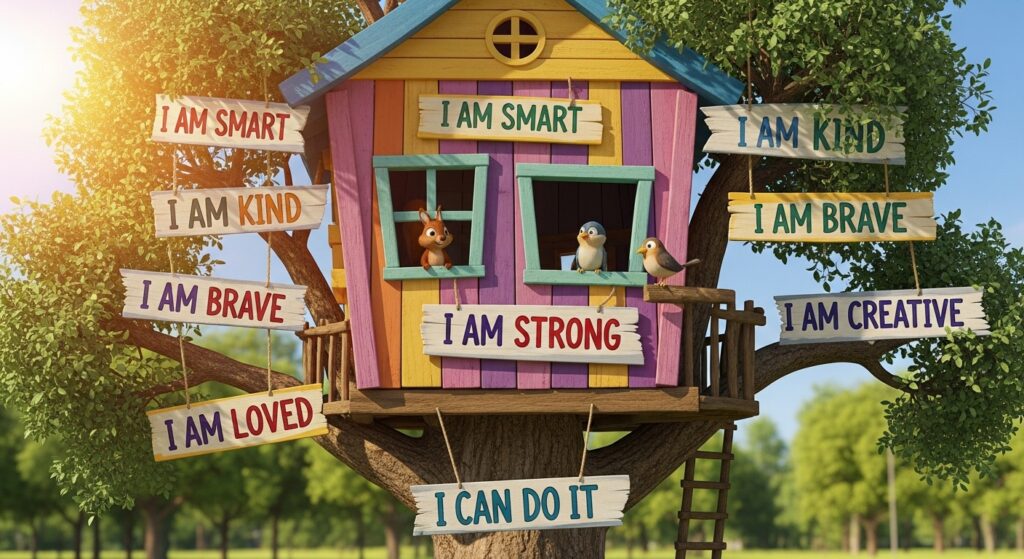
Here are the first 25 affirmations that children can begin using immediately. Each statement is designed to encourage confidence, motivation, and a positive mindset:
Short and Simple Morning Affirmations
I am brave and ready for today.
I can try new things and learn from them.
I am kind to myself and others.
I am capable of solving problems.
I choose happiness and calm today.
My ideas are important and worth sharing.
I believe in myself and my abilities.
I am grateful for this new day.
I can stay positive even when things are hard.
I am proud of my efforts.
Positive and Motivational Morning Affirmations
Today, I will do my best and enjoy every moment.
I can face challenges with courage and patience.
I bring joy to myself and those around me.
I am learning and growing every day.
I am proud of who I am becoming.
Today is full of opportunities to be creative.
I can make a difference in small, meaningful ways.
I choose kindness in all my actions.
I am strong and capable of overcoming obstacles.
I am responsible for my thoughts and choices.
Faith-Neutral and Gratitude-Based Morning Affirmations
May today bring me peace, calm, and happy moments.
I am surrounded by support and love.
Each new day is a chance to try again.
I am safe, loved, and confident in myself.
I have everything I need to succeed today.
These affirmations provide children with practical tools to start the day with a positive mindset, enhancing emotional, cognitive, and social development.
Psychological Impact of Using Morning Affirmations

When practiced regularly, morning affirmations strengthen a child’s emotional resilience, self-awareness, and self-regulation. Children learn to respond thoughtfully to challenges, rather than react impulsively. Affirmations also support the development of a growth mindset, allowing children to embrace learning opportunities and view mistakes as chances to improve.
Over time, these practices can reduce anxiety, promote self-worth, and foster an optimistic approach to daily life. Affirmations also contribute to the development of social skills, helping children engage positively with peers and adults.
Remaining 25 Positive Daily Affirmations for Kids
Continuing from the first section, here are affirmations 26–50 to help children build confidence, motivation, and a positive mindset throughout the day:
Positive and Motivational Morning Affirmations
I am capable of learning new things every day.
I choose to focus on solutions instead of problems.
I am patient and understanding with myself and others.
Today, I will spread kindness wherever I go.
I dare to try again after mistakes.
I am creative, and my ideas are valuable.
I embrace challenges as opportunities to grow.
I am responsible for my actions and choices.
Today, I will listen carefully and show respect to everyone.
I am confident in expressing myself positively.
Faith-Neutral Morning Blessings
May today be full of calm and happy moments.
I am supported and loved in everything I do.
I welcome new experiences with joy and curiosity.
I am safe and protected, and I trust myself.
Today is an opportunity to do my best and enjoy learning.
Gratitude-Based Morning Affirmations
I am thankful for the people who care about me.
I appreciate the small joys in life around me.
I am grateful for my creativity and imagination.
Today, I notice the beauty in every little thing.
I am thankful for my health, energy, and abilities.
Shareable and Social Morning Affirmations
Good morning! Today is full of possibilities, and I am ready.
I shine bright today, and my kindness matters.
I choose to smile, stay positive, and enjoy each moment.
Hello! I can make today joyful for myself and others.
I am loved, important, and capable of great things today.
These affirmations can be spoken aloud, written in journals, displayed visually, or shared with friends and family. Regular practice helps children internalize positive thinking, improve emotional regulation, and build confidence that carries through daily life.
How to Integrate Affirmations Into Daily Routines

Affirmations are most effective when they are a natural part of a child’s day. Here are practical strategies to make them a habit:
Morning Practice: Begin the day with 5–10 minutes dedicated to affirmations. Encourage children to speak them aloud or reflect silently.
Journaling: Children can write down affirmations each morning to reinforce focus and intention.
Visual Boards: Display affirmations in bedrooms, study spaces, or common areas as daily reminders.
Shared Practice: Reciting affirmations with siblings, friends, or classmates encourages bonding and shared positivity.
Reflection Moments: Use affirmations before school, meals, or bedtime to foster calmness and mindfulness.
Consistently integrating these practices helps affirmations become habitual, enhancing emotional intelligence, self-esteem, and a positive mindset over time.
Emotional and Psychological Benefits
Morning affirmations have profound effects on children’s mental health and social well-being:
Reduce anxiety and negative self-talk.
Build self-worth and a sense of identity.
Encourage problem-solving and thoughtful decision-making.
Support social skills and positive peer interactions.
Create habits of gratitude and mindful reflection.
Affirmations teach children to approach their day with optimism and resilience, helping them navigate challenges calmly and confidently.
Final Thoughts
Morning affirmations are a simple yet powerful tool to help children develop confidence, positivity, and emotional resilience. By practicing affirmations for kids daily, children can approach each day with optimism, focus, and gratitude.
Consistent use of these 50 affirmations encourages mindfulness, strengthens self-esteem, and builds a foundation for lifelong positive habits. Children who practice affirmations develop emotional intelligence, social skills, and resilience, empowering them to navigate daily challenges with calm, courage, and joy.
By integrating these affirmations into morning routines, journaling, visual reminders, or shared family practices, children can carry a sense of empowerment and positivity throughout their day, fostering growth in every aspect of their lives.
Frequently Asked Questions
How often should children use affirmations?
Children should practice affirmations daily, ideally in the morning. Consistent repetition helps internalize positive thinking and strengthens confidence and focus.
Can affirmations help with school performance?
Yes. Affirmations support concentration, reduce anxiety, and encourage children to approach tasks positively, enhancing learning and academic performance.
Are affirmations effective for social situations?
Absolutely. Affirmations help children build social confidence, communicate more effectively, and approach peers with kindness and understanding.
Can younger children use affirmations?
Yes. Affirmations can be simplified for toddlers and preschoolers, focusing on short, clear statements like “I am brave” or “I am kind.”
How do parents and caregivers support affirmations?
Parents can model positive affirmations, create a routine, provide visual cues, and encourage children to reflect or write their affirmations daily.